




算法题型:二叉树
二叉树
二叉树是常见的底层数据结构,也是递归的重要应用场景
1 种类
- 满二叉树:所有节点都齐全的一个二叉树
- 完全二叉树:除了底层全部都满,并且 从左到右 连续有节点,满二叉树一定是完全二叉树
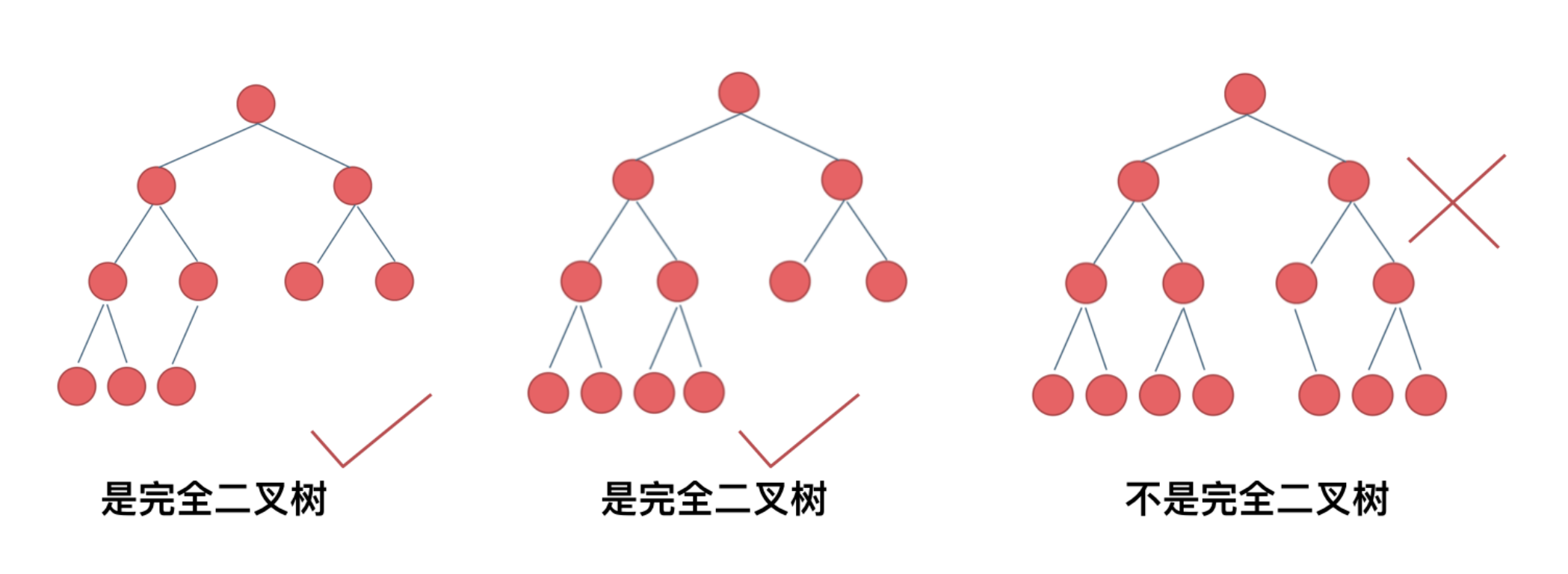
搜索二叉树与满二叉树 - 二叉搜索树:搜索效率是 O(log n),节点元素有顺序,可以是左小右大
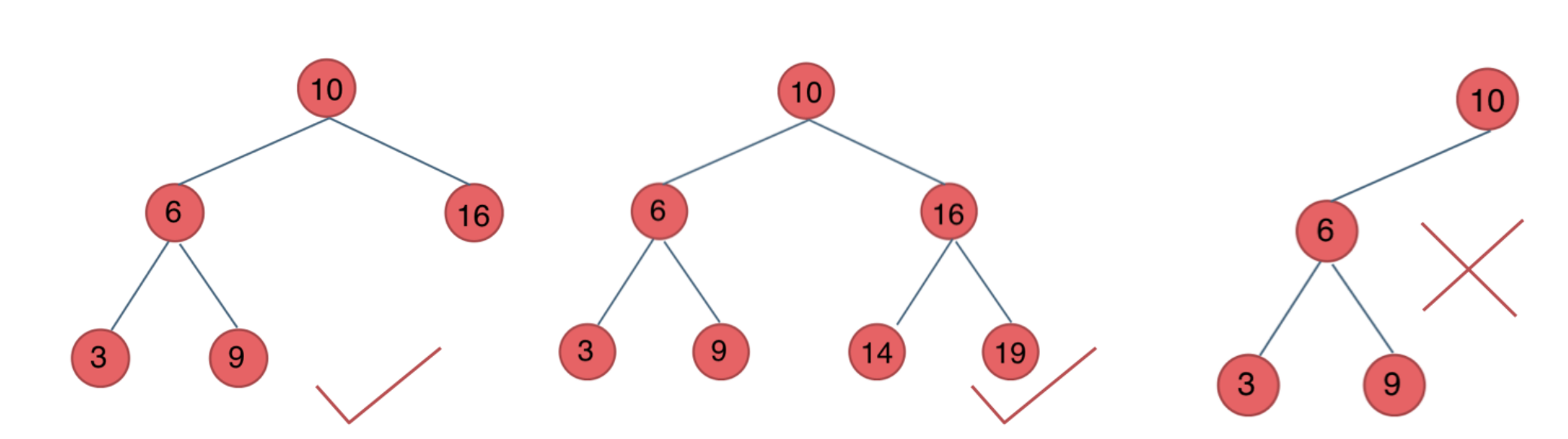
- 平衡二叉树:左子树高度和右子树高度差绝对值 小于 1
在 C++ 中 std::set / std::multiset / std::map / std::multimap 都由红黑树(自平衡二叉搜索树)
下方演示了如何判断平衡二叉搜索树
2 存储方式
2.1 链式
使用左右指针即可,如果没有孩子则为 nullptr
代码实现如下:
struct TreeNode {
    int val;                // 节点值
    TreeNode* left;         // 左子节点
    TreeNode* right;        // 右子节点

    TreeNode(int x) : val(x), left(nullptr), right(nullptr) {}  // 构造函数
};
2.2 线性
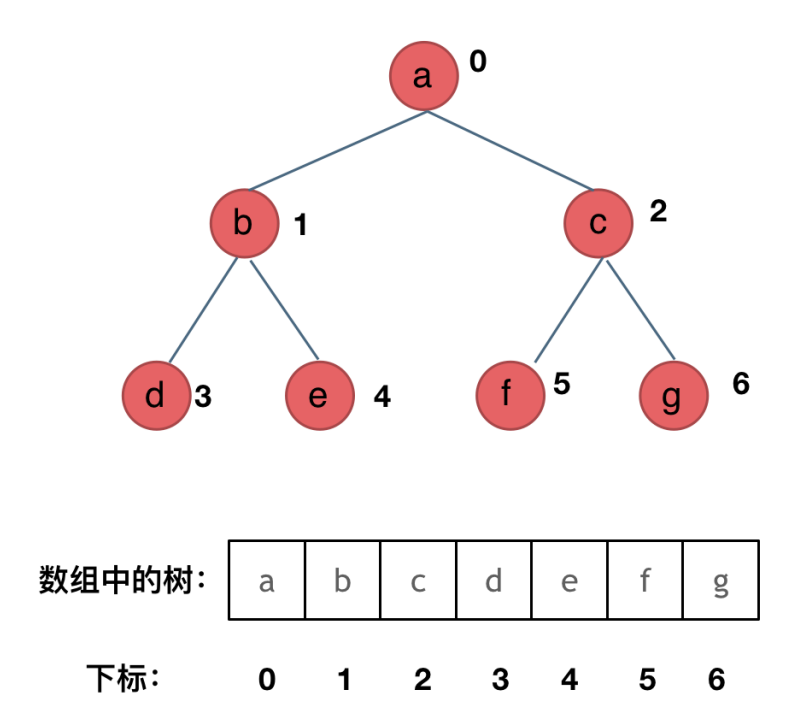
线性存储唯一要注意的就是如何计算左右孩子,(实际上不太会用这种方式存储)
假设根节点是编号 i ,左孩子的 2i + 1, 右孩子 2i + 2
3 遍历方式
3.1 深度优先搜索(DFS)
一般使用的 前中后序遍历都属于 DFS,可以使用递归或者迭代的方式实现,本质是栈 FILO
前中后指的是父节点的访问顺序
- 前序遍历: 中左右,前序遍历是按照数据结构来顺序处理节点,迭代逻辑最简单
- 中序遍历:左中右,中序遍历对二叉搜索树有排序的作用
- 后序遍历:左右中,后序遍历有回溯的功能,能够实现类似从下向上遍历的功能
下面是两种方式实现中序遍历,注意中序遍历能够获得二叉搜索树排序后的结果
#include <vector>
void inorderRecursive(TreeNode* root, std::vector<int>& res) {
    if (!root) return;
    inorderRecursive(root->left, res);
    res.push_back(root->val);
    inorderRecursive(root->right, res);
}
前序遍历的 DFS (迭代)要更加简单一点,因为访问和处理的节点都是同一个
#include <vector>
#include <stack>
using namespace std;

class Solution {
public:
    vector<int> preorderTraversal(TreeNode* root) {
        vector<int> ret;
        if (!root) return ret;
        stack<TreeNode*> stk;
        stk.push(root);

        while (!stk.empty()) {
            TreeNode* curr = stk.top();
            stk.pop();
            ret.push_back(curr->val);

            if (curr->right) stk.push(curr->right);
            if (curr->left)  stk.push(curr->left);
        }
        return ret;
    }
};
后序遍历有两步:
- 将前序左右子树访问顺序交换: 中左右 -> 中右左
- 将结果翻转(双指针): 左右中
中序遍历要复杂一点,需要借助指针深度访问到底,再进行对应处理
// 迭代法中序遍历
#include <stack>
#include <vector>
std::vector<int> inorderIterative(TreeNode* root) {
    std::vector<int> res;
    std::stack<TreeNode*> st;
    TreeNode* curr = root;

    while (curr || !st.empty()) {
        // 一直向左走
        while (curr) {
            st.push(curr);
            curr = curr->left;
        }
        // 访问栈顶节点
        curr = st.top();
        st.pop();
        res.push_back(curr->val);
        // 转向右子树
        curr = curr->right;
    }
    return res;
}
也有一种使用标记法的方式,可以使用同一个代码结构完成 3 种遍历,稍微难理解一点
3.2 广度优先搜索 (BFS)
层序遍历,就是使用迭代法进行,本质是使用队列的 LIFO
注意的是需要记住每一层的队列中的元素个数
#include <vector>
#include <queue>
class Solution {
public:
    vector<vector<int>> levelOrder(TreeNode* root) {
        queue<TreeNode*> q;
        vector<vector<int>> ret;
        if (!root) return ret;
        q.push(root);
        while(!q.empty()) {
            // 取出所有的子节点
            vector<int> ret_layer;
            int current = q.size();
            for (int i = 0; i < current; i++) {
                TreeNode* cur = q.front();
                q.pop();
                if (cur->left) q.push(cur->left);
                if (cur->right) q.push(cur->right);
                ret_layer.push_back(cur->val);
            }
            ret.push_back(ret_layer);
        }
        return ret;
    }
};
4 题目选取
挑选一些初见不是很顺利的题记录一下
递归的要义:
- 返回值和输入参数
- 终止条件
- 递归细化逻辑
4.1 平衡二叉树(求深度)
平衡二叉树是左右子树 高度 差 不大于 1
主要知识点:求 高度 需要使用 后序遍历 , 求 深度 使用 前序遍历
原因: 后序遍历,根节点最后遍历,层层向上返回,根节点根据左右孩子的数据来计算;反之则是孩子获取到根节点的深度
#include <cmath>
class Solution {
public:
    bool isBalanced(TreeNode* root) {
        if(getHeight (root) >= 0) {
            return true;
        } else {
            return false;
        }
    }

    int getHeight(TreeNode *curr) {
        // 获取高度,如果不平衡直接返回 -1
        // 高度要使用后序遍历
        if (curr == nullptr) return 0;

        int left = getHeight(curr->left);
        int right = getHeight(curr->right);

        if (left == -1 || right == -1) return -1;
        if (abs(left - right) > 1) {
            return -1;
        } else {
            return (left > right ? left : right) + 1;
        }
    }
};
4.2 中序后序构造二叉树
总体逻辑是轮流进行分割,需要注意的是先要确定返回条件,设置为 root 节点
- 后序遍历最后一个就是根节点的值
- 根据这个值来构造一个节点
- 根据这个值去将中序数组切割成左右两部分
- 根据中序的值将后序的左右部分分开
- 进一步递归(中序左,后序左)(中序右,后序右),分别是左右孩子
注意到这里为了代码可读性,每次都进行一个复制操作。实际可以优化为每次都传递索引值
class Solution {
public:
    TreeNode* buildTree(vector<int>& inorder, vector<int>& postorder) {
        if (!postorder.size())
            return nullptr;

        return _buildTree(inorder, postorder);
    }

    TreeNode* _buildTree(vector<int> inorder, vector<int> postorder) {
        // 数组为空代表已经完毕
        if (postorder.size() == 0) {
            return nullptr;
        }

        // 1 后序遍历最后一个数字取出,构造根节点
        int sz = postorder.size();
        int cut1 = postorder[sz -1];
        postorder.pop_back();
        TreeNode* root = new TreeNode(cut1);

        // 2. 分割中序
        int i = 0;
        for (; i < inorder.size(); i++) {
            if (inorder[i] == cut1)
                break;
        }
        vector<int> in_left(inorder.begin(), inorder.begin() + i);
        vector<int> in_right(inorder.begin() + i + 1, inorder.end());

        // 3. 按照左边 size 分割后序
        vector<int> post_left(postorder.begin(), postorder.begin() + i);
        vector<int> post_right(postorder.begin() + i, postorder.end());

        // 递归并构造
        root->left = _buildTree(in_left, post_left);
        root->right = _buildTree(in_right, post_right);

        return root;
    }
};
4.3 二叉搜索树 BST
判断一个 BST 是否是有效,使用递归
关键在于想清楚 当前最大值的逻辑
class Solution {
public:
    bool isValidBST(TreeNode* root) {
        long long maxVal = LONG_MIN;
        return _isValidBST(root, maxVal);
    }

    bool _isValidBST(TreeNode* root, long long& max) {
        if (!root) return true;

        // 中序遍历
        bool left = _isValidBST(root->left, max);
        if (root->val <= max)
            return false;
        else
            max = root->val;
        bool right = _isValidBST(root->right, max);

        return left && right;
    }

};
4.4 二叉树的最近公共祖先
这道题的回溯返回值很精妙,应该时常复习
因为二叉树只能从根节点从上往下,所以使用回溯的思想,也就是后序遍历
左右子树如果出现了目标元素就返回值,否则返回空;如果一个节点左右子树都出现了返回值,那代表是公共祖先
- 参数返回:根节点,返回
nullptr或者对应的节点 - 终止条件:返回节点则继续上报
class Solution {
public:
    TreeNode* lowestCommonAncestor(TreeNode* root, TreeNode* p, TreeNode* q) {
        // 终止递归条件:空节点或者已经找到
        if (!root) return nullptr;
        if (root == p || root == q) return root;

        TreeNode* left = lowestCommonAncestor(root->left, p, q);
        TreeNode* right = lowestCommonAncestor(root->right, p, q);

        // 已经找到
        if (left && right) {
            return root;
        }
        // 传递返回已经找到的值, nullptr 也会正确返回
        return left ? left : right;
    }
};
4.5 二叉搜索树的插入
添加节点相对简单,不需要改变原有的树结构
使用递归方法
可能会把方法想的很复杂,但是实际上很简单,记住就行
class Solution {
public:
    TreeNode* insertIntoBST(TreeNode* root, int val) {
        if (root == nullptr) {
            TreeNode* ret = new TreeNode(val);
            return ret;
        }
        if (val > root->val) root->right = insertIntoBST(root->right, val);
        if (val < root->val) root->left = insertIntoBST(root->left, val);
        return root;
    }
};
4.6 删除二叉搜索树的节点
情况很多,比添加复杂得多,需要考虑很多的情况
一共有五种情况:
- 没有找到,不用删除
- 删除叶子节点,直接设为
nullptr - 左非空右空,将父节点的左孩子指向被删的孩子
- 左空右非空,同理跳过被删节点直接指向孩子
- 左右都非空,最复杂的,让右子树继位,左子树找到右子树的最左侧的节点(右子树中最小的位置),接上。
返回值设置为节点指针,外层需要接住,这样可以很方便地修改二叉树的结构
class Solution {
public:
    TreeNode* deleteNode(TreeNode* root, int key) {
        // 返回的节点通过外层接住
        // 终止条件就是所有的删除逻辑
        if (root == nullptr) return nullptr;
        if (root->val == key) {
            // 找到了
            if (!root->right && !root->left) {
                delete root;
                return nullptr;
            } else if (!root->right && root->left) {
                // 只有左边节点
                TreeNode* tmp = root->left;
                delete root;
                return tmp;
            } else if (!root->left && root->right) {
                // 只有右边节点
                TreeNode* tmp = root->right;
                delete root;
                return tmp;
            } else {
                // 右节点继承,左子树全移动到最左下方
                TreeNode* curr = root->right;
                while (curr->left) {
                    curr = curr->left;
                }
                curr->left = root->left;
                TreeNode* tmp = root->right;
                delete root;
                return tmp;
            }
        }
        // 递归逻辑
        if (root->val < key) root->right = deleteNode(root->right, key);
        if (root->val > key) root->left = deleteNode(root->left, key);
        return root;
    }
};
4.7 修剪二叉搜索树
让节点中所有的数值保持在给定的区间内,同时不应该改变原有的树的结构
修建二叉树对结构需要重新修改,会稍微复杂一点
不可以在某个节点不符合条件时候直接删除并返回nullptr,因为其孩子是有可能符合区间条件的
注意:不需要在 LeetCode 中处理内存释放问题
正确逻辑:
- 如果本节点小于下界,应该向右遍历(其右孩子是有可能符合条件的),大于同理
- 如果符合条件,正常处理左右子树
class Solution {
public:
    TreeNode* trimBST(TreeNode* root, int low, int high) {

        if (!root) return nullptr;
        if (root->val < low) {
            // 从右子树继续递归,删除本节点
            return trimBST(root->right, low, high);
        } else if (root->val > high) {
            return trimBST(root->left, low, high);
        }
        root->right = trimBST(root->right, low, high);
        root->left = trimBST(root->left, low, high);
        return root;
    }
};
4.8 有序数组转换为二叉平衡搜索树
有一些点需要注意,思考一下
什么时候不需要将根节点传入作为参数?为什么本题不需要通过判断传入参数来 return nullptr
class Solution {
public:
    TreeNode* sortedArrayToBST(vector<int>& nums) {
        int left = 0;
        int right = nums.size();
        TreeNode* root = nullptr;
        root = _build(nums, left, right);
        return root;
    }
    TreeNode* _build(vector<int>& nums, int left, int right) {
        // 组里面没有元素了
        if (left >= right) return nullptr;
        int mid = ((right - left) / 2) + left;

        // 构建中点,外层接住
        TreeNode* curr = new TreeNode(nums[mid]);
        curr->left = _build(nums, left, mid);
        curr->right = _build(nums, mid + 1, right);

        return curr;
    }
};
5 易混淆点
5.1 节点指针参数
5.1.1 不需要传递节点指针
当每次递归都独立创建或遍历子树,父节点仅需接收返回值挂接:
TreeNode* build(const vector<int>& nums, int l, int r) {
    if (l >= r) return nullptr;
    int m = (l + r) / 2;
    TreeNode* root = new TreeNode(nums[m]);
    root->left = build(nums, l, m);
    root->right = build(nums, m + 1, r);
    return root;
}每一层都独立产生节点,不依赖外层状态,不传当前节点指针。
这种结构用于:
- 构建树(如
sortedArrayToBST) - 查找并返回新根(如
trimBST、invertTree) - 需要改变结构并返回新子树时
5.1.2 需要传递节点指针
当函数要在原有节点基础上修改或统计信息,且操作依赖父层状态:
void dfs(TreeNode* node, int depth, int& sum) {
    if (!node) return;
    if (!node->left && !node->right) sum += depth;
    dfs(node->left, depth + 1, sum);
    dfs(node->right, depth + 1, sum);
}
典型用途:
- 访问或统计整棵树(遍历)
- 回溯时要恢复状态
- 需要知道父节点信息或方向(左/右)
5.2 递归返回值
- 不要返回值:搜索整棵⼆叉树且不用处理递归返回值
- 需要返回值:搜索整棵⼆叉树且需要处理递归返回值
- 必须有返回:遇到符合条件的路径了就要及时返回,例如搜索其中⼀条符合条件的路径
只需要搜索⼀条边
if (递归函数(root->left)) return ;
if (递归函数(root->right)) return ;
搜索整个树
left = 递归函数(root->left);  // 左
right = 递归函数(root->right); // 右
left与right的逻辑处理;         // 中
5.2.1 返回 void
当递归只是访问、打印、统计、累积而不改变结构,这种函数只是向外输出或修改外部变量,不需要返回子树。
void preorder(TreeNode* node) { ... }
void dfs(TreeNode* node, int& sum) { ... }
5.2.2 返回 TreeNode*
父节点要拿到新的子树根进行挂接,递归会改变树结构(删除、修剪、构造):
TreeNode* trimBST(TreeNode* root, int low, int high);
TreeNode* invertTree(TreeNode* root);
TreeNode* deleteNode(TreeNode* root, int key);
5.2.3 返回 bool
用于存在性判断 / 条件是否满足,当子树满足条件时应提前终止或者向上报告
- 一旦有一个分支返回
true,整棵递归可结束。 - 常用于“是否存在路径”、“是否对称”、“是否平衡”等问题。
bool hasPathSum(TreeNode* node, int sum, int target) {
    if (!node) return false;
    sum += node->val;
    if (!node->left && !node->right) return sum == target;
    return hasPathSum(node->left, sum, target) ||
           hasPathSum(node->right, sum, target);
}
5.2.4 返回其他类型
常用于值的累积 / 特征汇总,常用于求高度、节点数、直径、最大路径和等。
int maxDepth(TreeNode* node) {
    if (!node) return 0;
    int l = maxDepth(node->left);
    int r = maxDepth(node->right);
    return std::max(l, r) + 1;
}
评论已关闭